
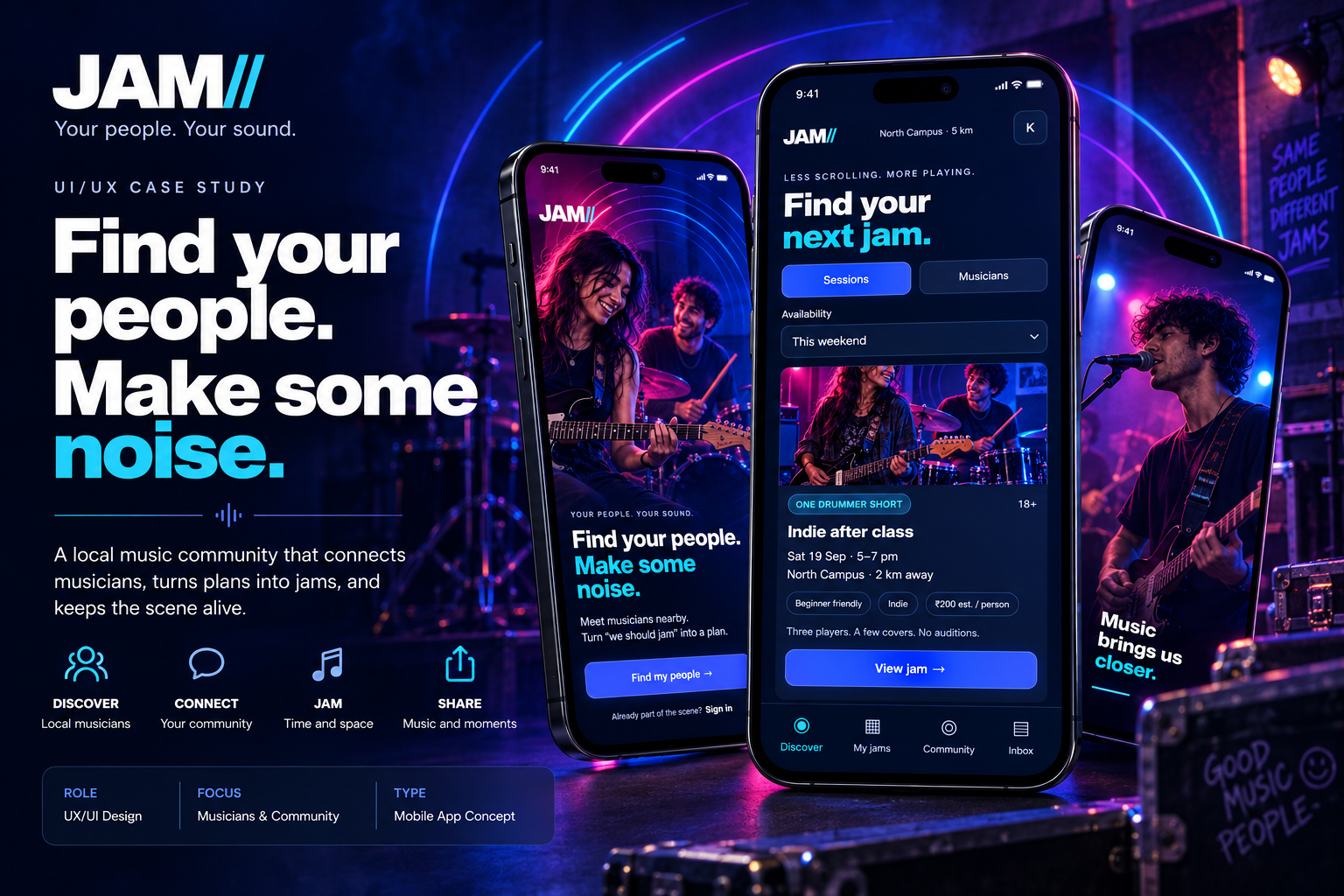
JAM
Find your people.
Make some noise.
A local music community concept that helps musicians find compatible people, turn plans into jam sessions and keep playing together.
Finding musicians is
only half the problem.
A suitable collaborator also needs a compatible schedule, clear expectations and a workable place to play.
JAM connects discovering musicians, coordinating a real session and staying connected afterward. Concrete sessions anchor discovery, while shared planning makes time, space and participation explicit.
This is a concept-stage project. Personas, affinity themes, session data and proposed journeys are illustrative hypotheses. Completed participant testing and measured product outcomes are not claimed.
From discovery
to playing together.
A visual walkthrough of the proposed experience and its midnight-blue, neon direction.
From musical intent
to a shared plan.
The process connects provisional needs, architecture, joining flows and wireframes. Select any board to inspect it at full size.
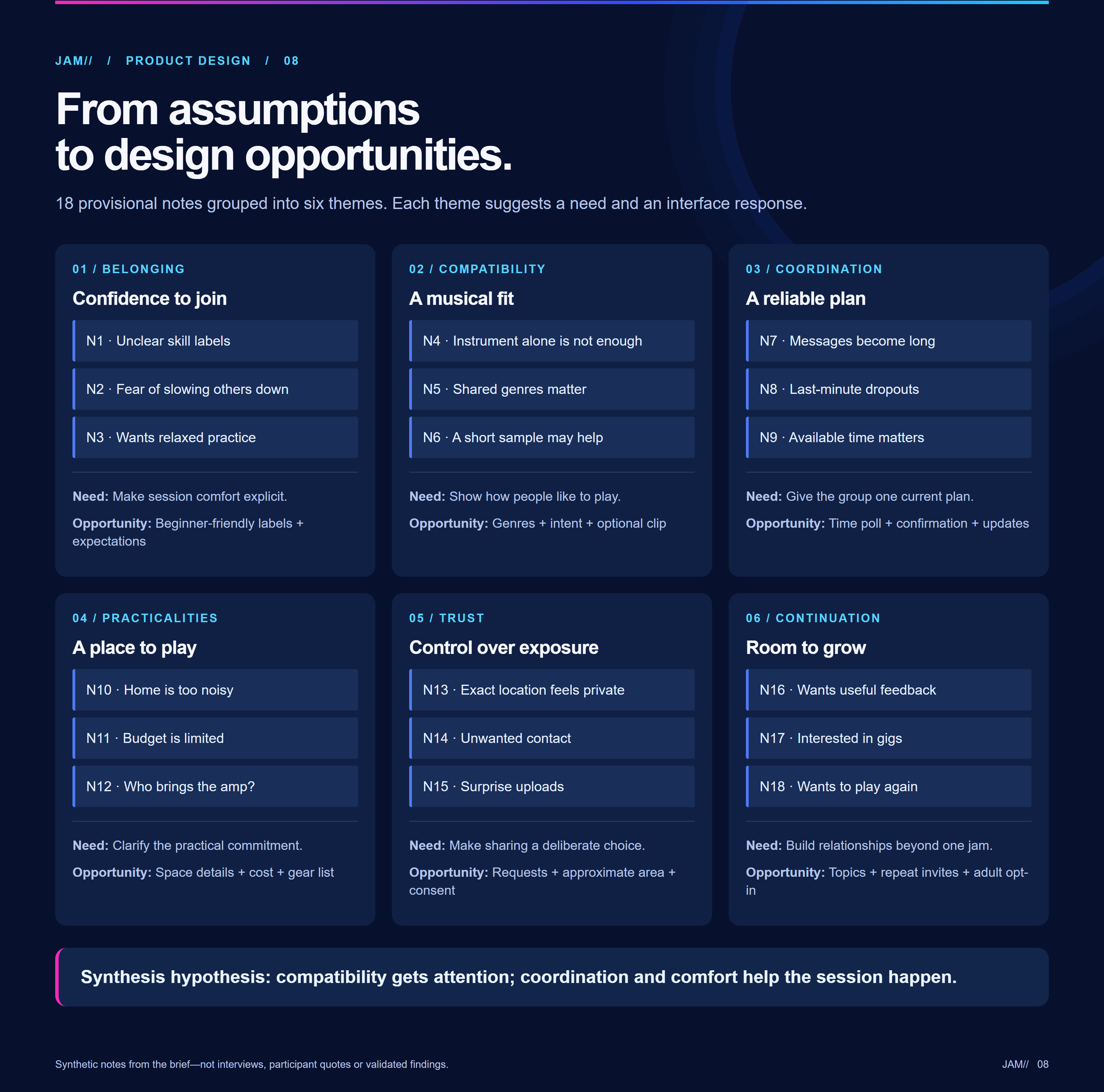
Affinity mapping
Synthetic notes from the brief are grouped into six provisional themes, connecting compatibility with coordination and comfort.
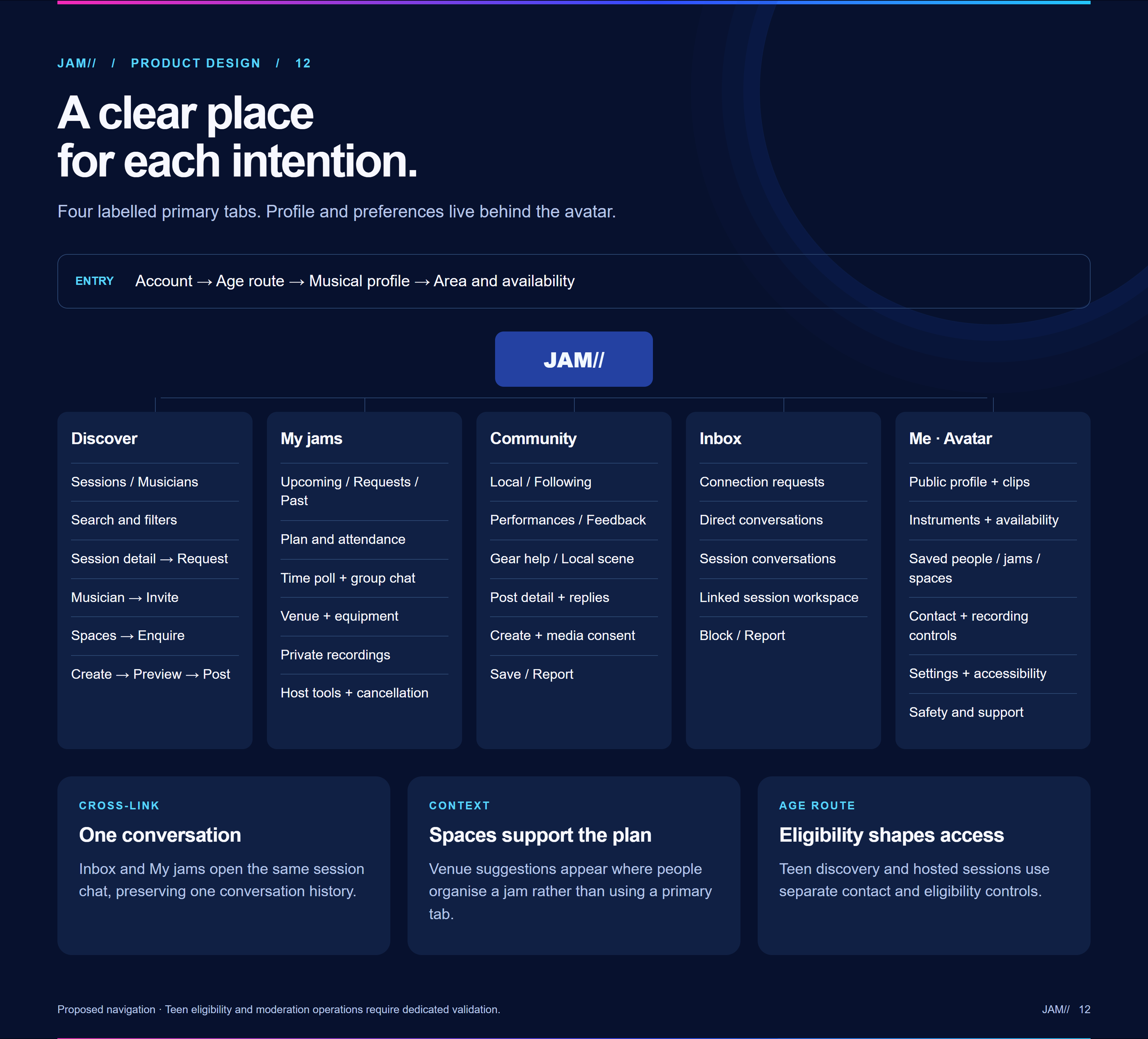
Information architecture
Discover, My jams, Community and Inbox give each intention a clear place. Spaces sit within session planning.
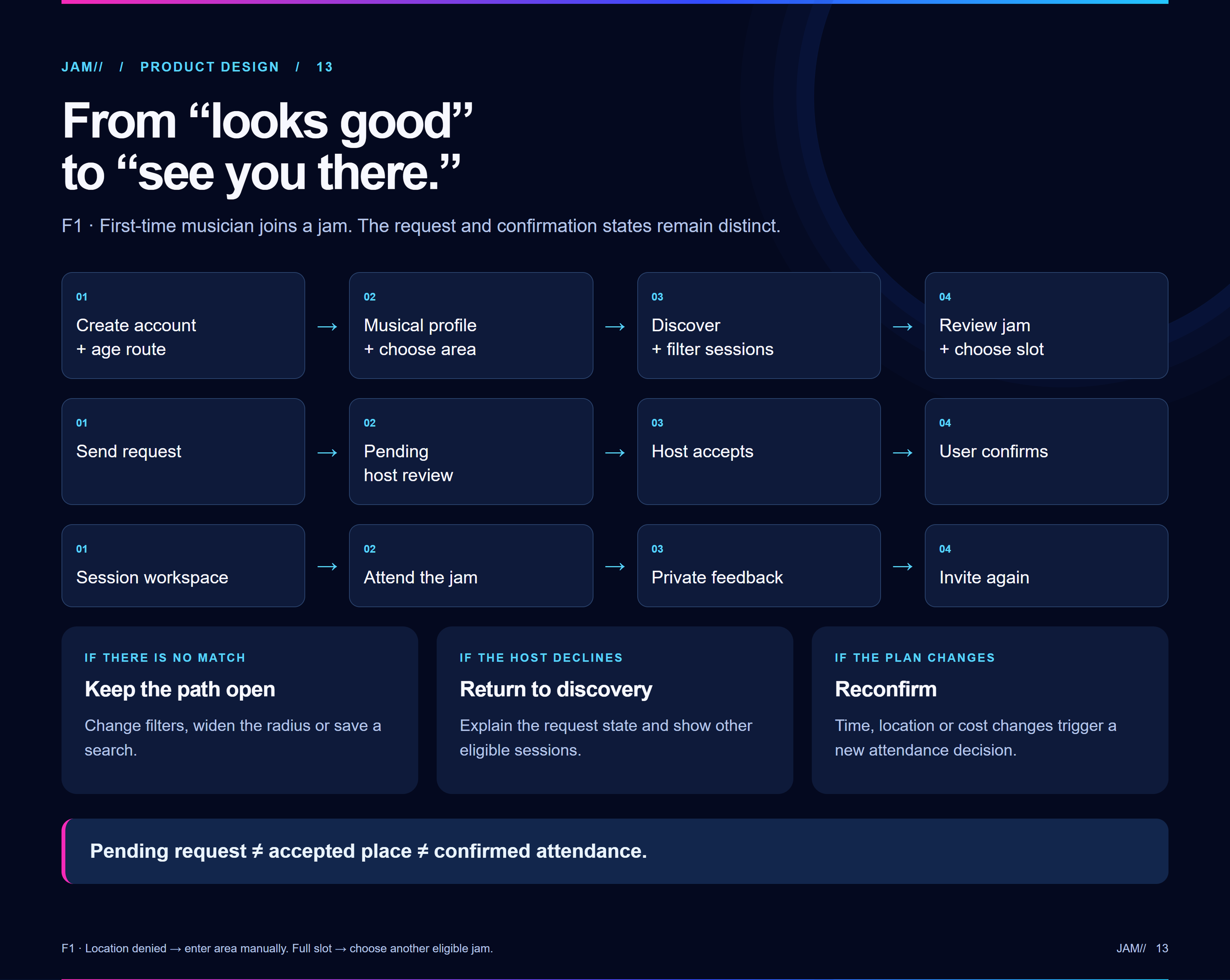
First-jam flow
A request, an accepted place and confirmed attendance are separate states, with recovery paths when plans change.
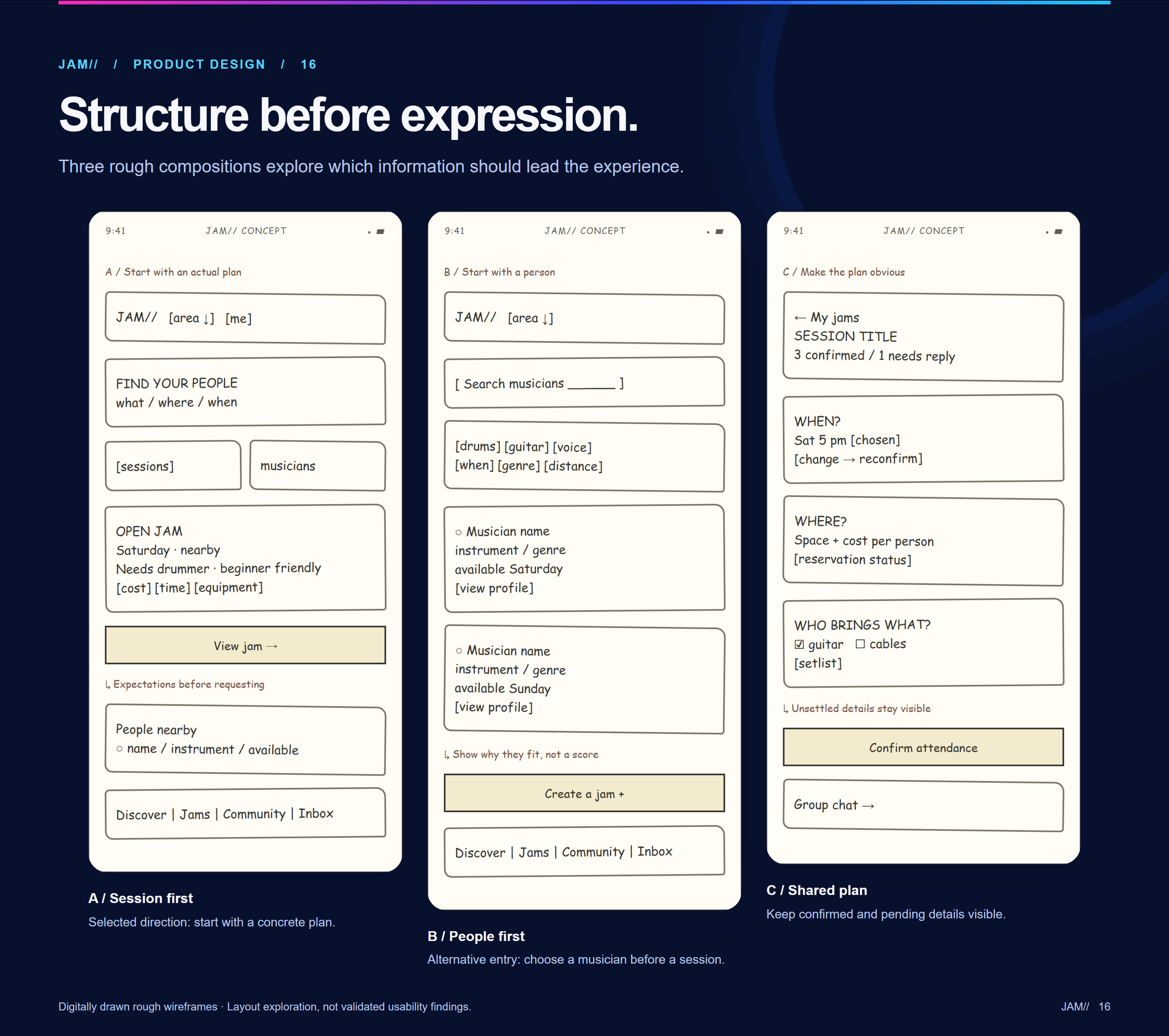
Sketch exploration
Session-first, people-first and shared-planning compositions explore the hierarchy before visual styling.
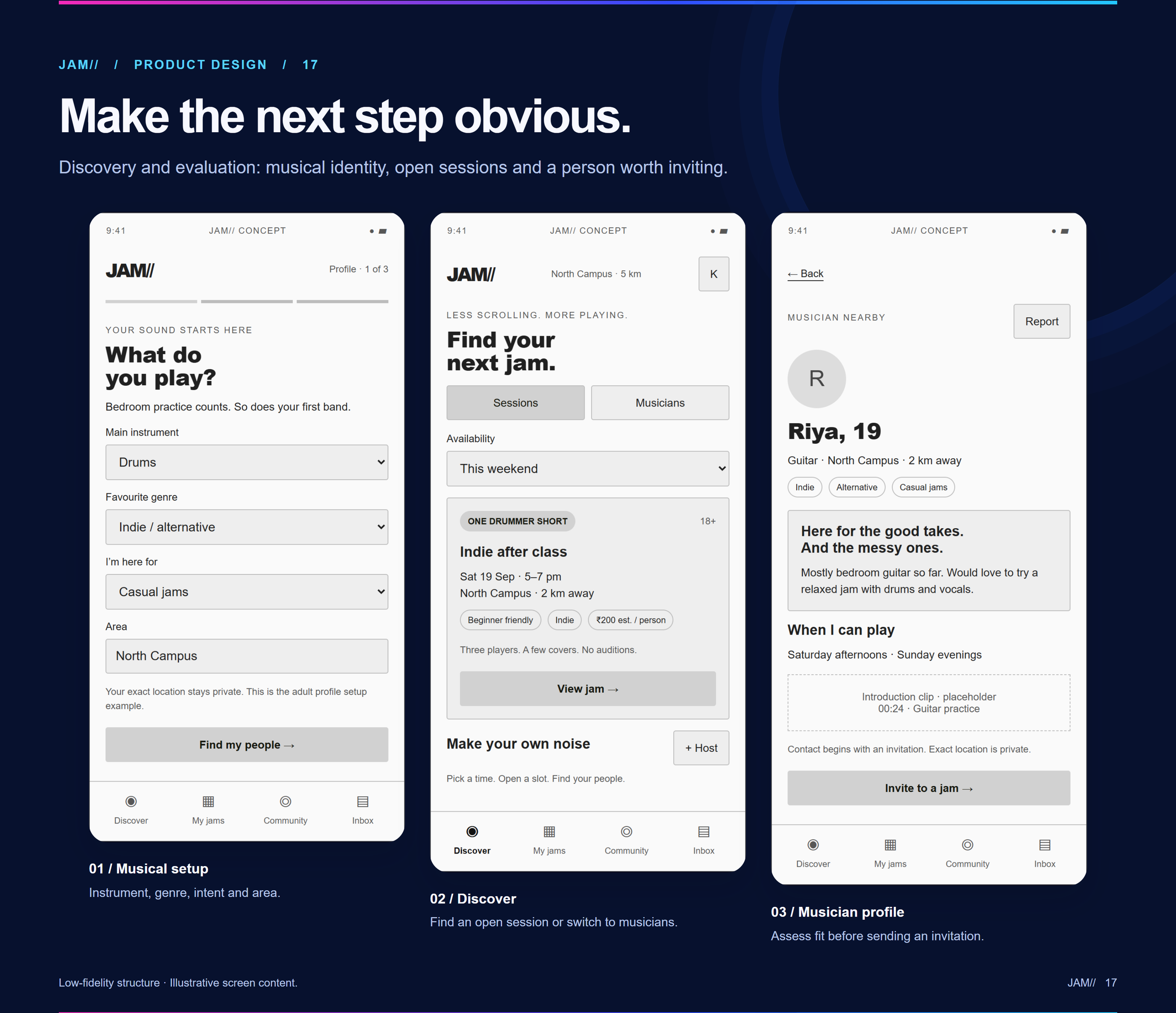
Low-fidelity wireframes
Setup, discovery and profiles make musical intent and availability visible without an invented compatibility score.
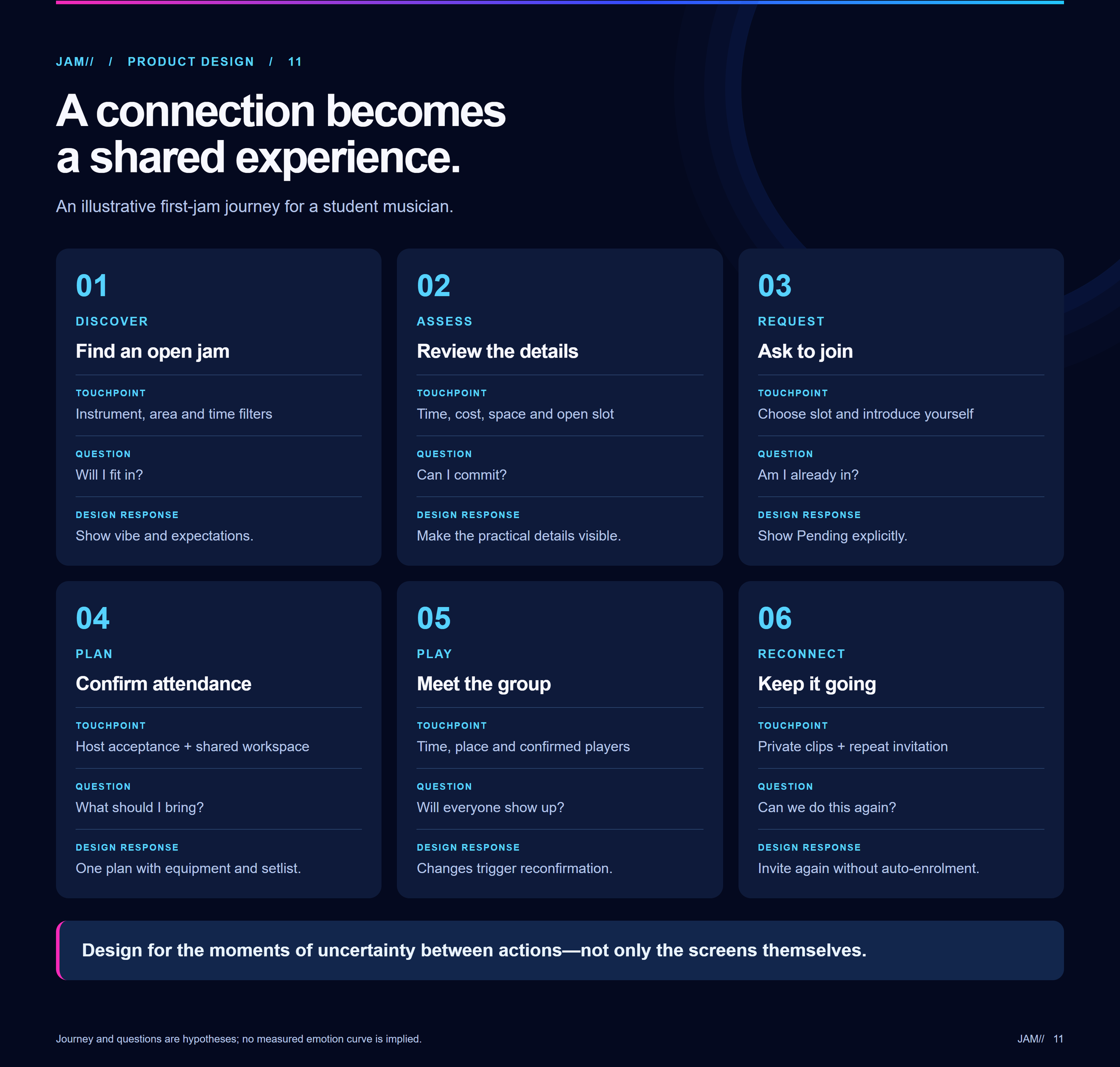
User journey
Discovery, assessment, requesting, planning, playing and reconnecting form one proposed experience.
Make the next
commitment clear.
The concept separates interest, acceptance and attendance, and keeps spaces within the planning task.
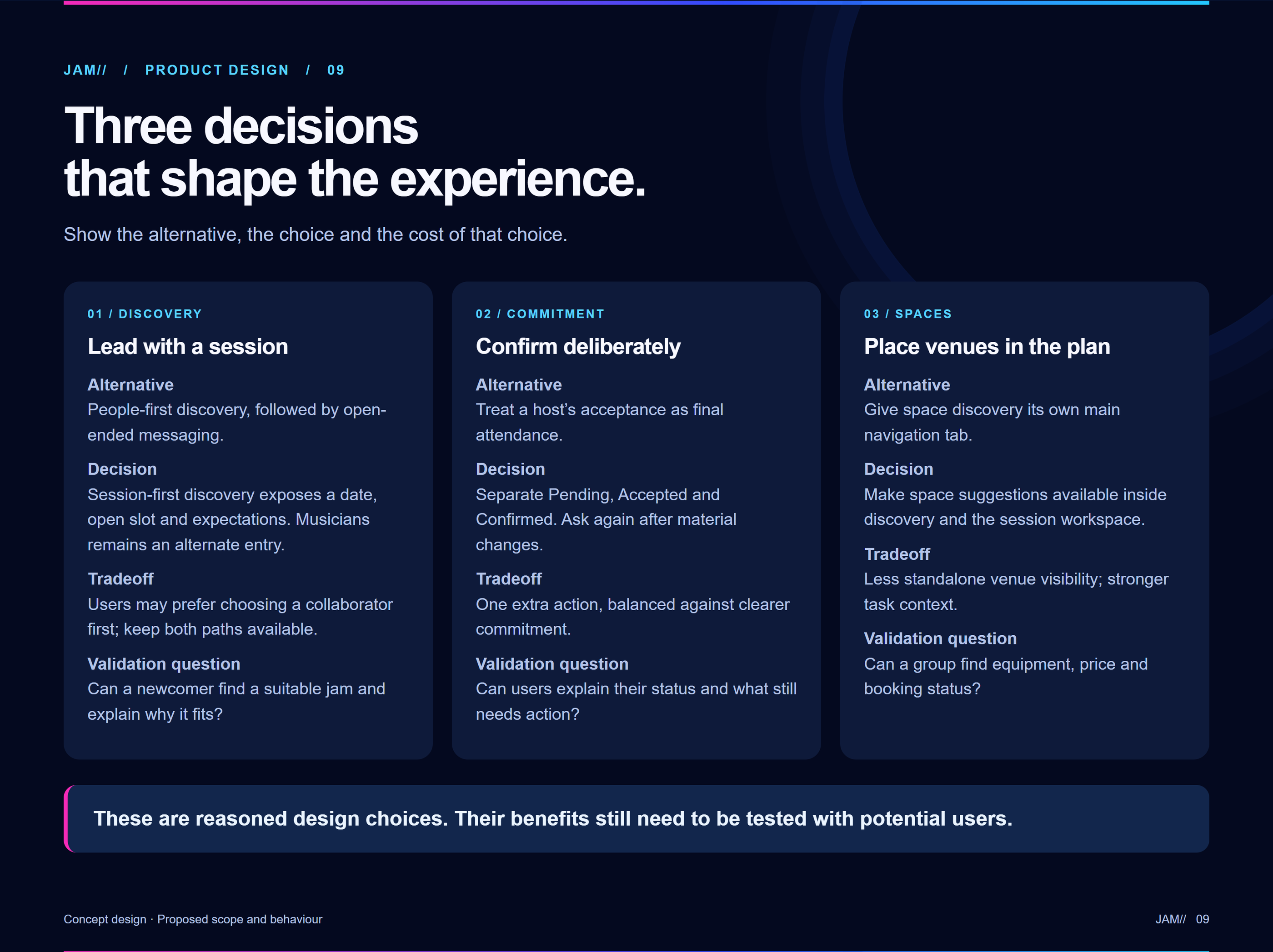
Key design decisions
Session-first discovery, deliberate confirmation and planning-led spaces are examined through alternatives and tradeoffs.
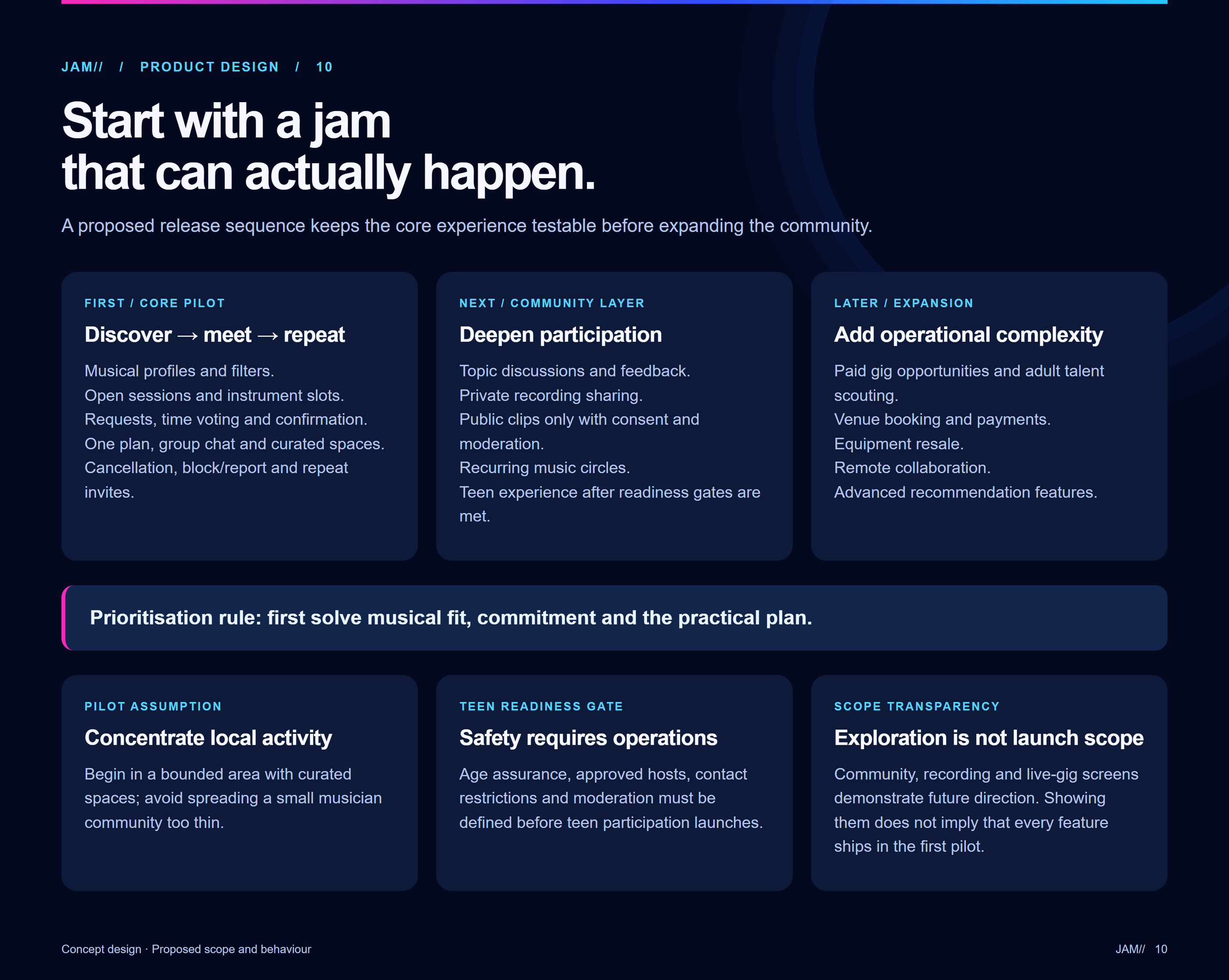
MVP priorities
The proposed pilot focuses on getting a session organised and attended before extending the wider community features.
Midnight blue.
Electric human energy.
Cobalt actions and selective cyan and pink accents bring the music imagery to life while practical session details stay clear.
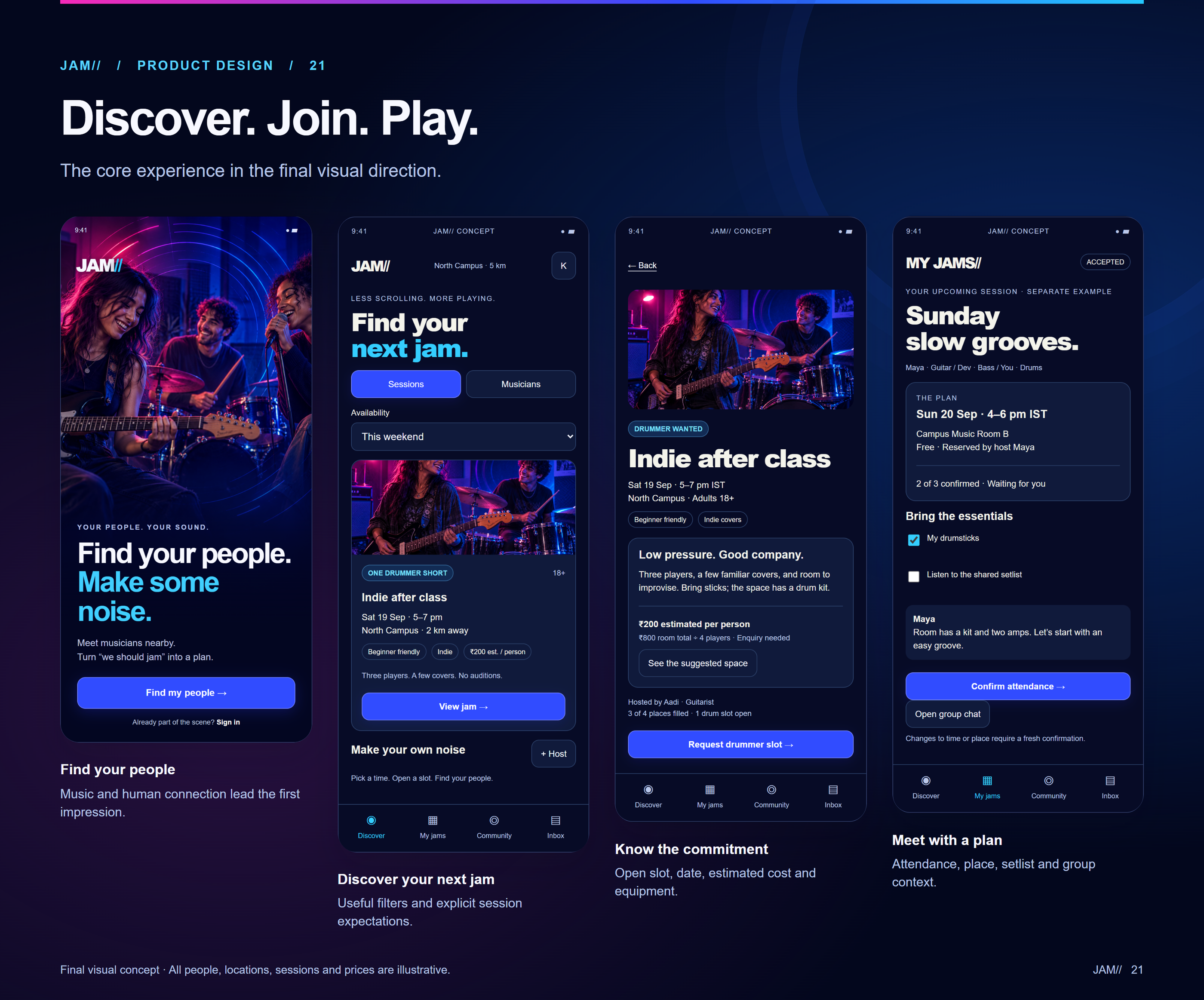
Discover. Join. Play.
Onboarding, discovery, session details and the shared workspace connect the central journey.
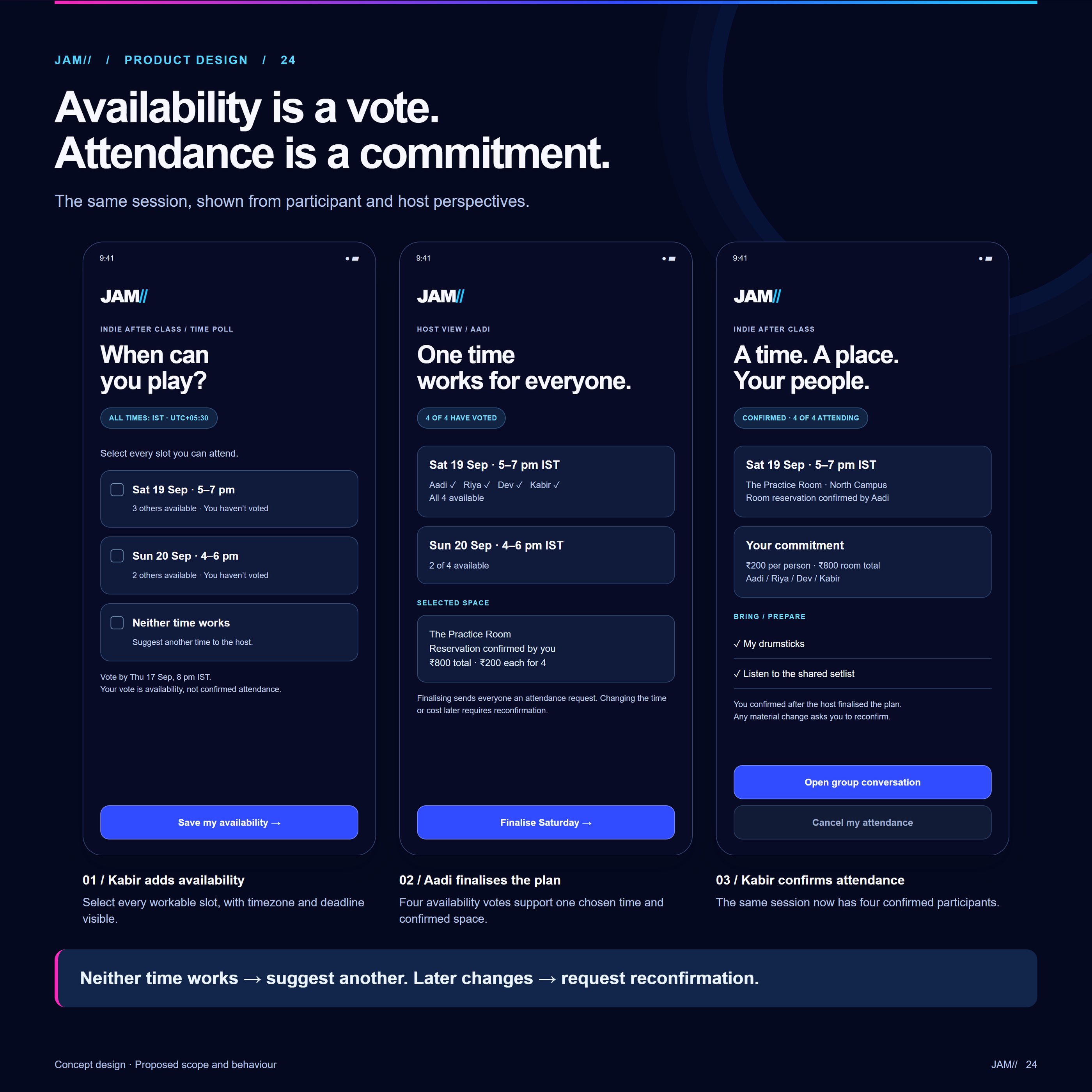
Availability and attendance
Participants vote on times; the host finalises the plan; attendance is confirmed separately.
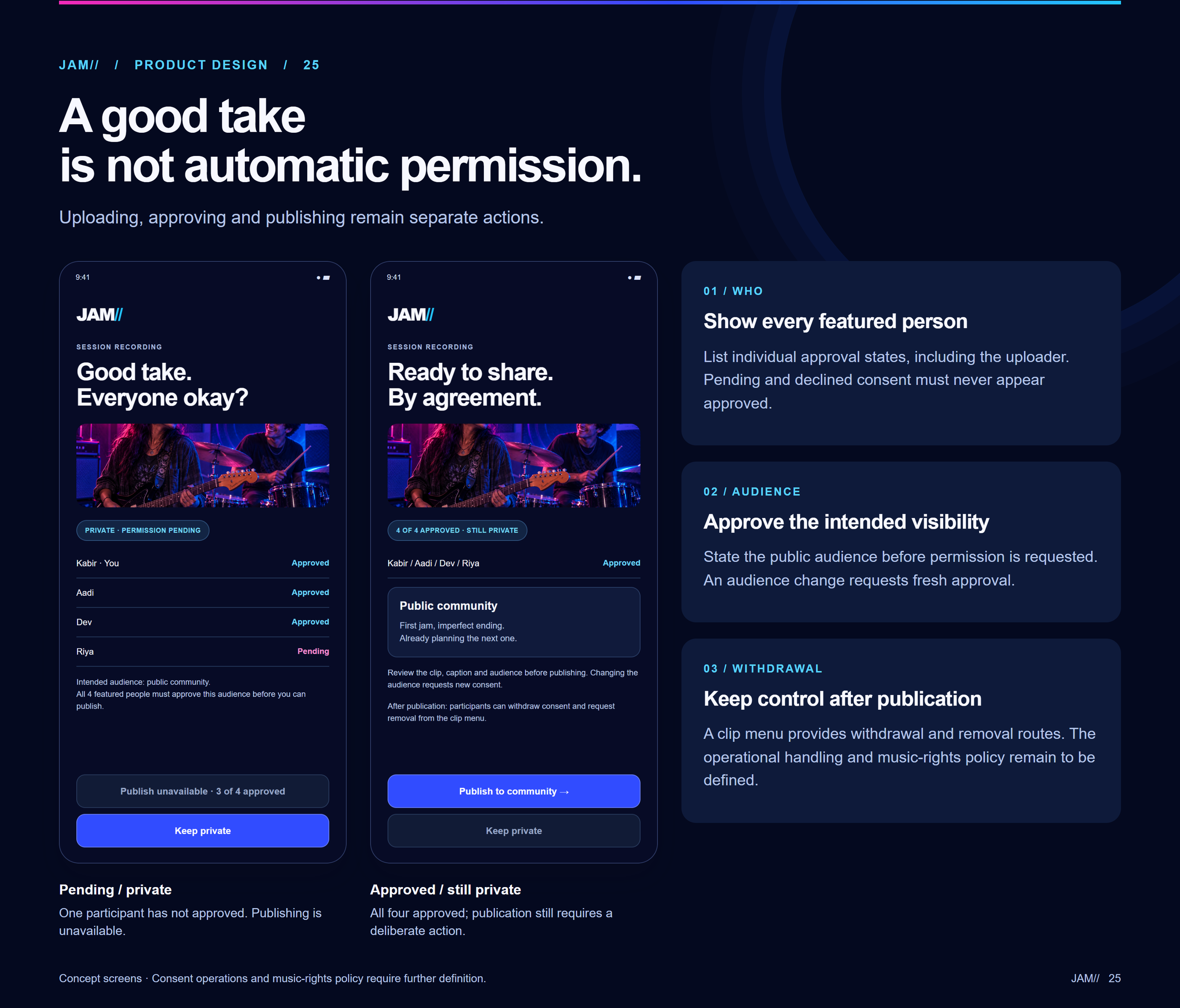
Recording consent
An approved recording remains private until the uploader deliberately publishes it.
The system behind
the screens.
Explore the visual system, musician journeys, navigation, reusable components and final screens behind JAM in one browsable reference.
One drummer.
One coherent journey.
An illustrative scenario follows Kabir through the same session from discovery to a repeat invitation.
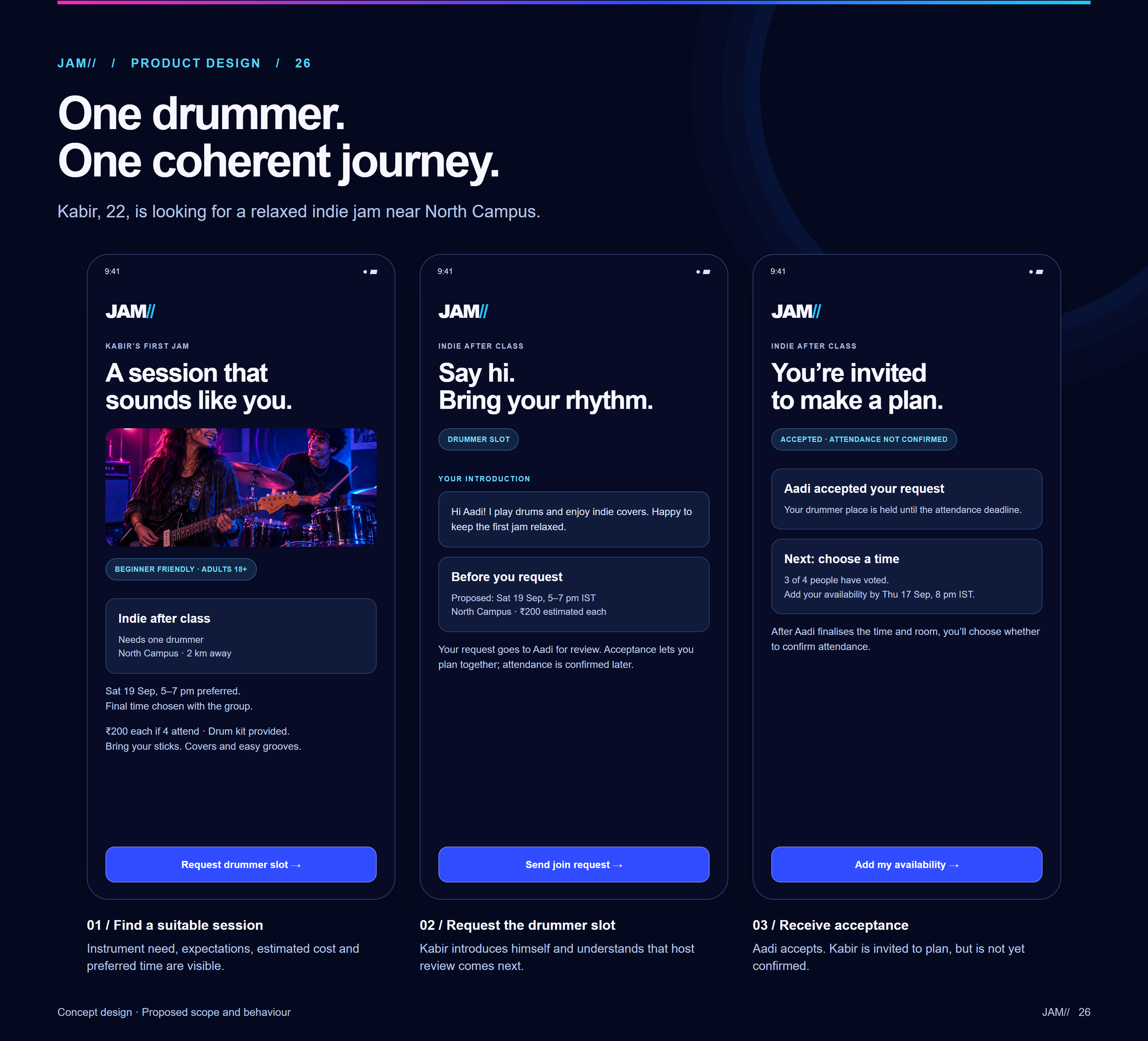
Discover and request
Kabir assesses the session, requests a place and sees the acceptance state.
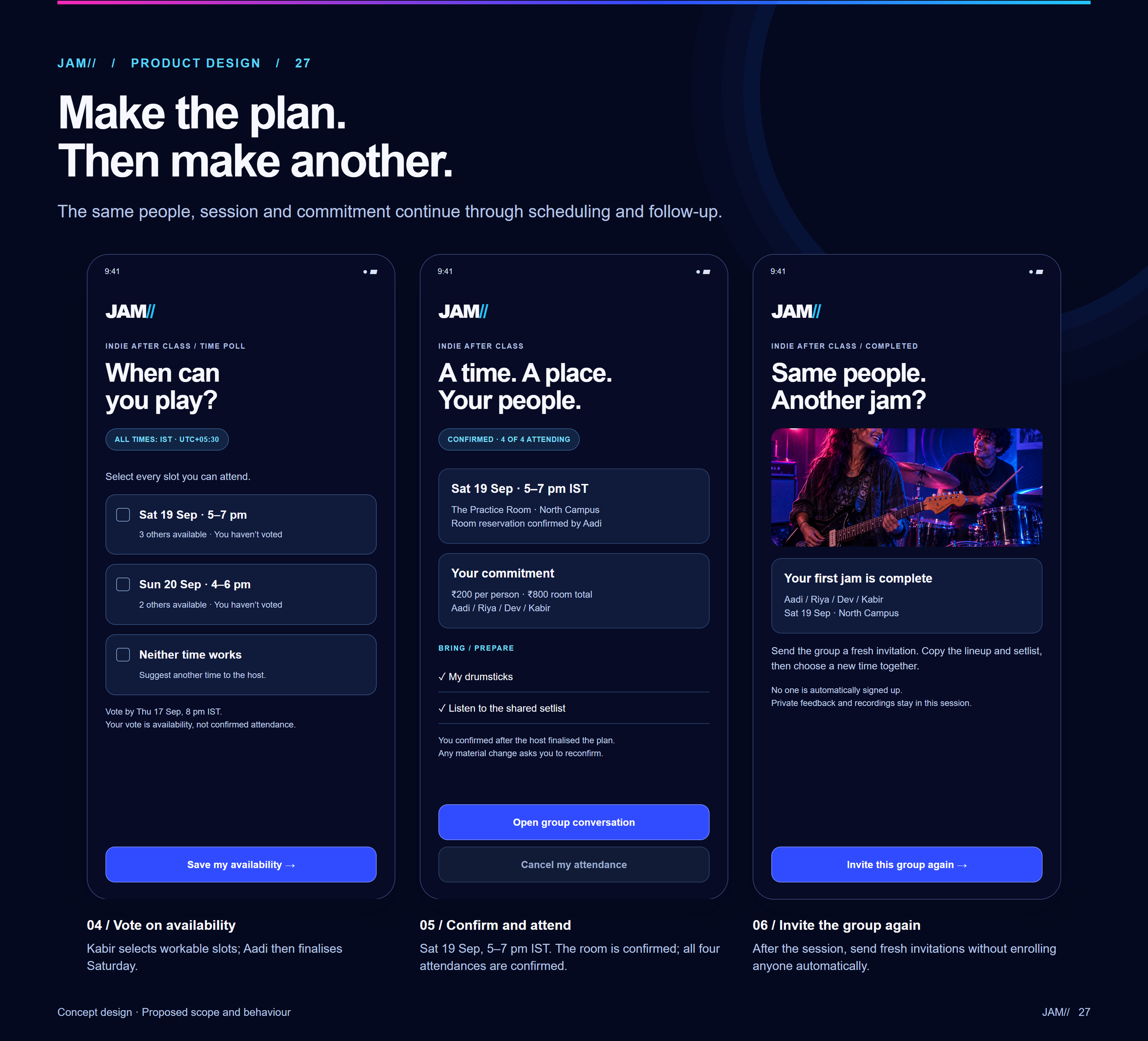
Plan, play and reconnect
Time coordination leads to a confirmed plan and a deliberate invitation to play again.
What changed.
What needs evidence.
Visual feedback shaped the direction. Behavioural validation and operational planning remain next steps.
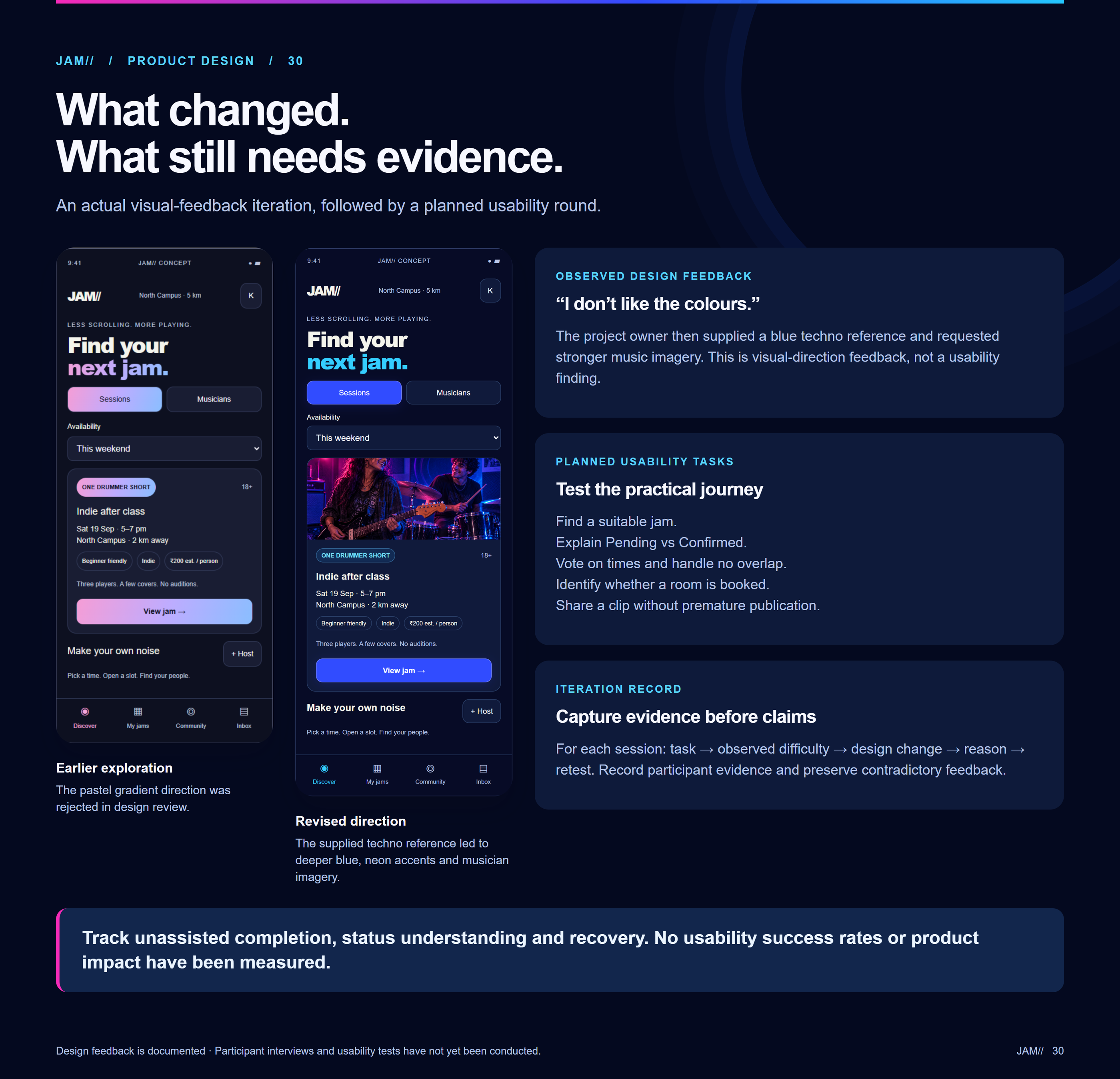
Feedback and validation
The colour revision is documented project feedback, separate from the proposed usability testing.
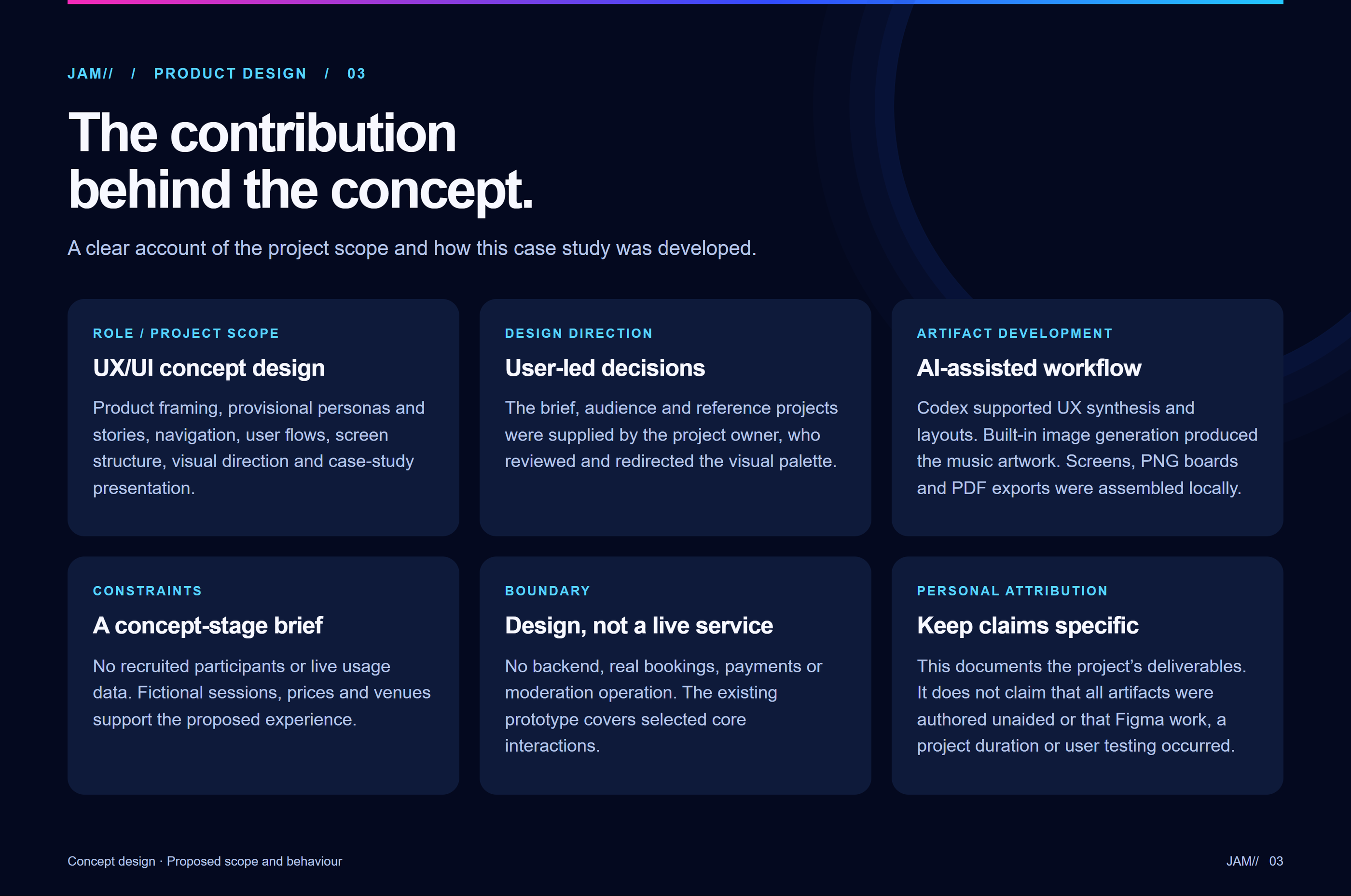
Role and scope
User-led product and visual direction is distinguished from AI-assisted artifact development.